

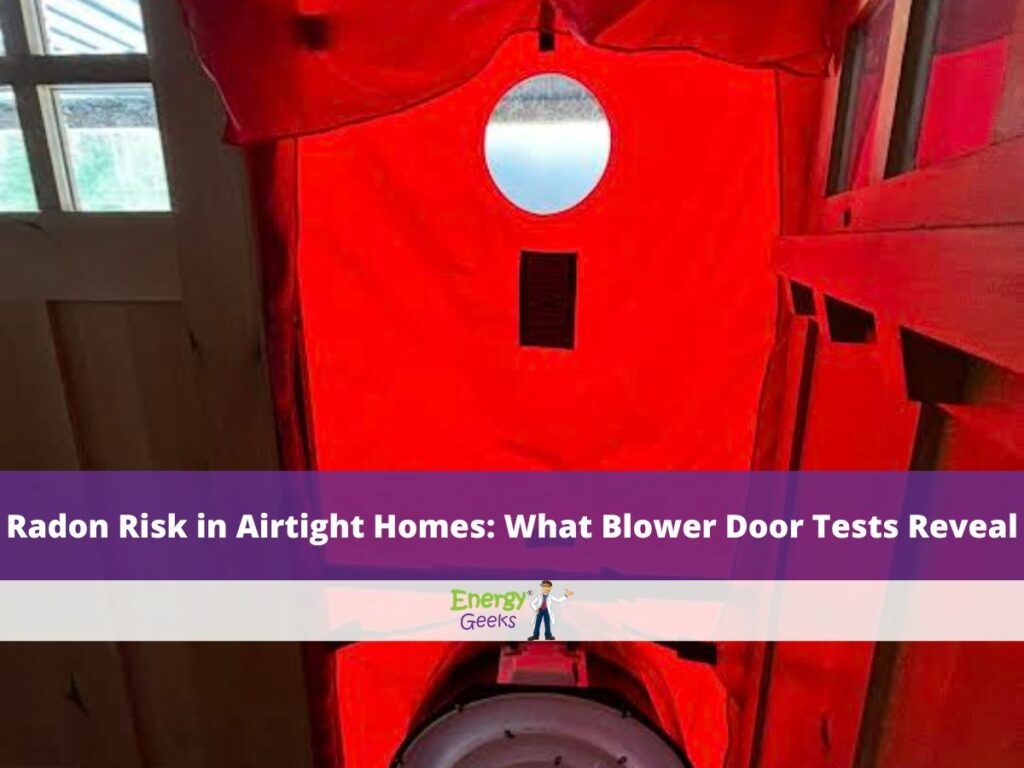
Worried about radon in your energy-efficient home? If your home has low blower door numbers, you’re likely enjoying the benefits of airtight construction—lower heating and cooling bills, better insulation performance, and reduced drafts. But without proper ventilation, you could be inviting an invisible hazard inside: radon gas.
Here’s how radon becomes a problem in well-sealed homes, and what you can do to stay safe without sacrificing energy efficiency.
Why Lower Blower Door Numbers Can Increase Radon Risk
A lower blower door test result means your home has fewer air leaks, which is great for saving energy. But that same airtight seal also limits natural air exchange, which is the regular movement of fresh air in and stale air out. Without this airflow, radon gas—a radioactive gas that enters from the ground—can build up to dangerous levels indoors.
In Rhode Island, Massachusetts, and Connecticut, where many homes are being upgraded for better energy performance, this is a growing concern. Especially in basements and crawl spaces, radon levels can rise quietly and undetected.
How Radon Enters and Builds Up in Airtight Homes
Radon naturally seeps into buildings from the soil through:
- Foundation cracks
- Gaps around plumbing or wiring
- Sump pits and crawl spaces
Once inside a tightly sealed home, the radon has nowhere to go. The reduced air changes per hour (ACH)—a key metric in blower door testing—means that harmful gases can accumulate to levels that pose serious health risks over time.
How to Reduce Radon Risk Without Compromising Efficiency
Here’s what homeowners in RI, MA, or CT can do to ensure both energy efficiency and indoor air quality:
1. Test for Radon Regularly
Even if your home is newly weatherized, radon testing is the only way to know if you have a problem. Short-term and long-term radon test kits are widely available—or you can schedule professional radon testing.
Tip: If you’ve recently had air sealing or insulation work done through programs like Mass Save or EnergyWise, make sure to follow up with a radon test.
2. Install a Mechanical Ventilation System
Airtight homes need help exchanging air. Installing systems like:
- Energy Recovery Ventilators (ERVs)
- Heat Recovery Ventilators (HRVs)
…can bring in fresh outdoor air while exhausting stale air, helping to control radon levels without losing heating or cooling efficiency.
3. Consider a Radon Mitigation System
If your radon levels are high, a radon mitigation system may be required. These systems:
- Use a vent pipe and fan
- Draw radon from below the foundation
- Vent it safely outside the home
This is especially important in homes with tight building envelopes and low blower door readings.
4. Seal Entry Points Strategically
Sealing foundation cracks, sump covers, and crawl space openings can reduce radon entry points. But this should always be done alongside mechanical ventilation or radon mitigation to avoid trapping the gas inside.
5. Balance Air Pressure
A well-balanced ventilation strategy ensures indoor and outdoor air pressures are even, preventing radon from being drawn into the home. This might mean adjusting ventilation rates or sealing strategies to maintain safe airflow without losing efficiency.
What Homeowners in RI, MA & CT Should Know
At Energy Geeks, we understand how important airtight construction is to improving comfort and reducing energy use. But we also know that indoor air quality must come first—especially when it comes to radon, which is the second leading cause of lung cancer in the U.S.
Whether you’re a homeowner in Providence, Boston, Hartford, or anywhere in between, we can help you balance airtightness with safe ventilation strategies tailored to your home.
Stay Energy Efficient—And Safe
Don’t let radon undo the benefits of your energy upgrades. If your blower door test results show a tightly sealed home, it’s time to think about radon mitigation and ventilation.
👉 Schedule a blower door test with Energy Geeks today.
We proudly serve Rhode Island, Massachusetts, and Connecticut, helping homeowners stay safe, efficient, and informed.