


Financing Your Sustainable Dream Home in Rhode Island Building a zero-energy home in Rhode Island is a significant step toward a sustainable future, but it comes with initial costs that can be daunting. Fortunately, a variety of green financing options are available to assist homeowners in making this environmentally friendly leap. From state incentives and…
Navigating the Path to Zero Energy Homes in Rhode Island The journey to building a zero-energy home in Rhode Island is both rewarding and challenging. As homeowners and builders commit to sustainable construction, they often encounter obstacles such as budget constraints, complex regulations, and finding skilled professionals. This manual, which draws on the experiences of…

Embracing Passive Design in Rhode Island’s Zero Energy Homes As Rhode Island moves towards a more sustainable future, the concept of passive design becomes increasingly significant in the construction of zero-energy homes. Passive design utilizes the natural environment to minimize energy consumption, relying less on active mechanical systems and more on the home’s architecture and…
Streamlining Construction with Early Duct Testing Building a new home in Connecticut, Massachusetts, and Rhode Island presents an excellent opportunity to embed energy efficiency right from the start. Early duct leakage testing, performed before the sheetrock installation, is a critical step in this process. It ensures that the heating, ventilation, and air conditioning (HVAC) systems…

Failing a blower door or duct leakage test can be a setback in the journey to making your home energy-efficient and obtaining a Certificate of Occupancy (CO). However, it’s an opportunity to address and improve your home’s energy performance. Understanding Why Failures Occur Failures in blower door or duct leakage tests often stem from a…
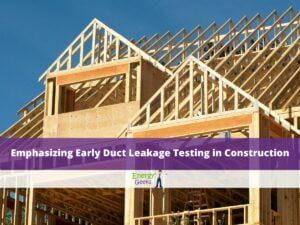
Pioneering Better Building Practices with Early Duct Testing Duct leakage testing is a crucial procedure typically performed towards the end of a home’s construction. However, conducting this test early in the construction process—specifically “in the rough,” before ductwork is covered by sheetrock—can have profound benefits for both homeowners and builders. This proactive approach ensures any…